
In this publication, you will find the most relevant reference books and bibliography that the professors at University Adviser use every day to manage tasks, assignments, and projects in physics, calculus, differential equations, descriptive and inferential statistics, accounting, and finance.
REFERENCE BOOKS ON MECHANICAL PHYSICS AND ELECTRICAL PHYSICS
These books are used in the first semesters or modules of study in basic science programs, mathematics degrees, and engineering. Within our bibliographies, we have the following books available in PDF format:
1) Serway, R. A., & Jewett, J. W. (2009). “Physics for Scientists and Engineers with Modern Physics”, 7th Edition. Vol. 1 and 2. Mexico City: Cengage.
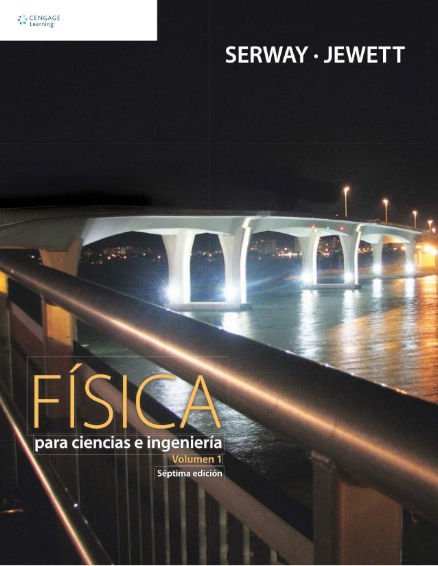
The new version (seventh edition) of the well-known work by Raymond A. Serway and John W. Jewett Jr., besides retaining its unique and powerful teaching capabilities, is now backed by technical tools that provide more support to users in courses on mechanical and electrical physics.
2) W. Sears, M.W. Zemansky, H.D. Young, and R.A. Freedman: “University Physics”, 12th Edition. Vol. 1 and 2. Addison-Wesley-Longman/Pearson Education.
This book by Sears Zemansky (12th Edition) covers courses related to classical physics and the fundamentals of modern physics for engineering, physics, and chemistry majors. It provides a graphical theoretical exposition and insights into each topic and application.
Here are some common reference books and bibliography used for Differential and Integral Calculus
Indeed, the books mentioned are essential resources for students studying engineering, physics, mathematics, architecture, and related fields. Understanding calculus is crucial for various disciplines, as it forms the basis for solving complex problems in science, engineering, and technology. These textbooks provide a comprehensive overview of differential and integral calculus, helping students develop essential skills and knowledge applicable across different domains.
1) Leithold, L. (1999). “El Cálculo,” 7th edition. Oxford University Press. Mexico.
As a true classic in intermediate and advanced calculus teaching, the seventh edition of Leithold retains the features that make it the most referenced textbook for students, but now combines the latest advances in technology and modern mathematics teaching methods. This book includes practical applications of graphic calculators, with new topics added such as numerical derivatives and numerical integration.
2) Stewart, J.; Redlin, L.; Watson, S., 2001. Precalculus: Mathematics for Calculus. 6th Edition. Thomson Learning. Mexico.
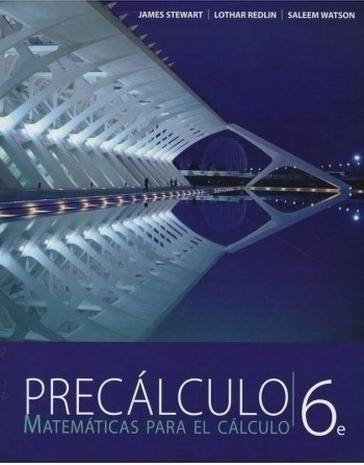
In this Precalculus textbook by Stewart (6th Edition) and his team, concepts are explained in a simple and clear manner without compromising on challenging problems. Problem-solving and mathematical modeling have been introduced and strengthened at the beginning of the book, providing students with a solid foundation for mathematical thinking principles.
The content of this book is clear and fluid, covering comprehensively the concept of functions and integrating a wealth of graphing calculator materials to help students deepen their understanding of mathematical ideas.
3) Stewart, James (2001): “Calculus: Early Transcendentals”. 7th edition. Thomson.
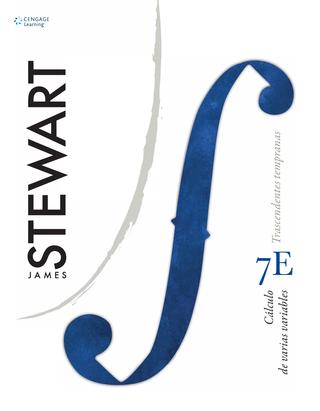
The texts CALCULUS by James Stewart are the best-selling texts in the world for a reason: they are clear, precise, and contain relevant real-world examples. In the seventh edition of Calculus: Early Transcendentals, Stewart not only conveys the utility of calculus to help you develop technical skills, but also allows you to appreciate the inner beauty of the subject.
His patient examples and integrated learning aids will help you build confidence in mathematics and achieve the goals of the course.
Here are some reference books commonly used in descriptive and inferential statistics
The reference books and bibliography we have for this segment of university courses in Statistics are multiple and varied. Below, we will show those that are most relevant in economics, administration, and psychology.
1) Mario F. Triola., 2013. “Statistics”. 11th Edition. Pearson Education. Mexico.
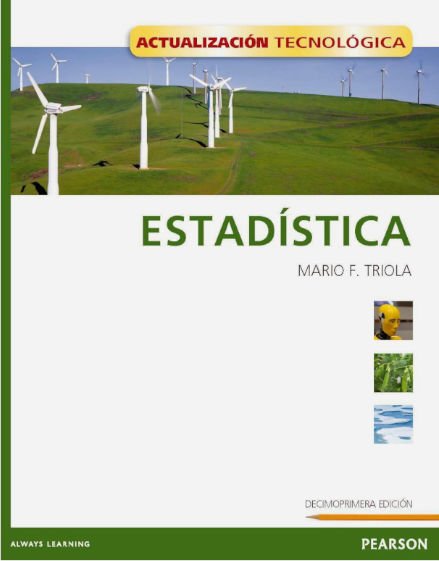
The Statistics book by Mario Triola remains the leading introductory statistics textbook in the market because it engages students with a wealth of real data in examples, applications, and exercises. Statistics surround us in our daily lives, and Triola is dedicated to finding new real-world examples and datasets for students to use in their classrooms.
2) Allen L. Webster., 2000. Applied Statistics to Business and Economics. 3rd Edition. McGraw-Hill Education. Colombia.
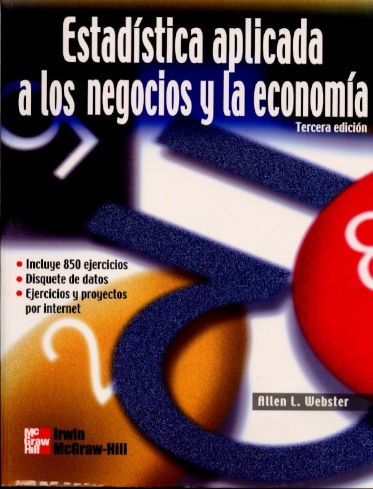
The book “Applied Statistics to Business and Economics” by Allen L. Webster allows students to conduct a serious analysis of real-world applications problems, rather than running simple applications.
The level of mathematics in this book is also higher than that of most business statistics textbooks, providing students with the knowledge they need to become more powerful analysts in future managerial positions. In this regard, it emphasizes understanding the assumptions necessary for professional analysis.
3) LEVIN and RUBIN. Statistics for Management and Economics, Pearson Education, seventh edition, 2004. Mexico.
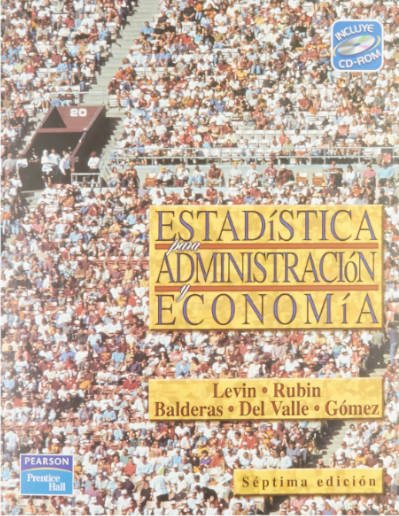
The objective of the seventh edition of “Statistics for Management and Economics” by Levin and Rubin is to write a text that is friendly to students of the subject and allows the instructor to find sufficient materials to tailor the course.
Here are some reference books and bibliography for Differential Equations and Applications
Sure, go ahead and list the books from your bibliography and references related to mathematical modeling with first, second, and higher order differential equations. These equations have applications in almost every academic field.
1) Zill, Dennis G. (2006). Differential Equations with Modeling Applications, Sixth Edition. Brooks/Cole Publishing Co. ITP.
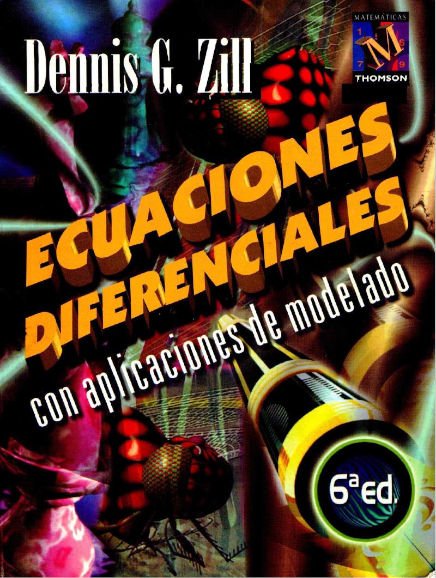
The sixth edition of “Differential Equations with Modeling Applications” has achieved a reasonable balance among analytical, qualitative, and quantitative methods in the study of differential equations.
This validated and easily accessible text supports students who are new to mathematics and engineering by providing a wealth of teaching aids (including numerous examples, explanations, “observation” boxes, definitions, and group projects).
This book employs a straightforward, readable, and practical style to comprehensively address issues related to modeling applications.
2) Dennis G. Zill and Warren S. Wright (2009). Differential Equations with Boundary-Value Problems, Eighth Edition. CENGAGE Learning.
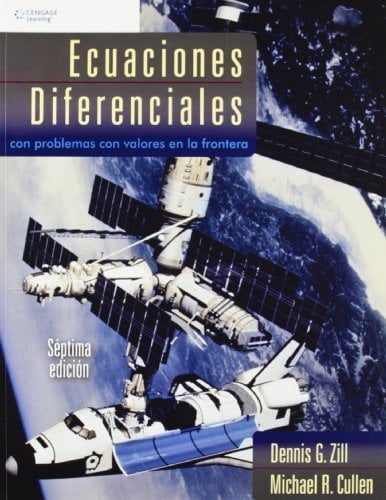
Straightforward and easy to read, DIFFERENTIAL EQUATIONS WITH BOUNDARY-VALUE PROBLEMS, 7th Edition, provides a comprehensive overview of topics typically covered in a first course on Differential Equations, along with an introduction to boundary value problems and partial differential equations.
Your study will be supported by a wealth of pedagogical aids, including numerous examples, explanations, “Comments” boxes, definitions, and more.
3) Murray R. Spiegel. Applied Differential Equations. Mexico Etc. : Prentice-Hall Hispanoamericana, 1983.
The objective of Murray’s Applied Differential Equations book is to provide students of engineering, natural sciences, and mathematics with an introduction to differential equations and their applications.
It demonstrates how differential equations can be useful in solving various problems; specifically, it shows students how to translate problems into differential equations, serving as a mathematical framework for solving differential equations based on given conditions.
4) C. Henry Edwards; David E. Penney (2009). Differential Equations and Boundary Value Problems, 4th Edition. Prentice Hall.
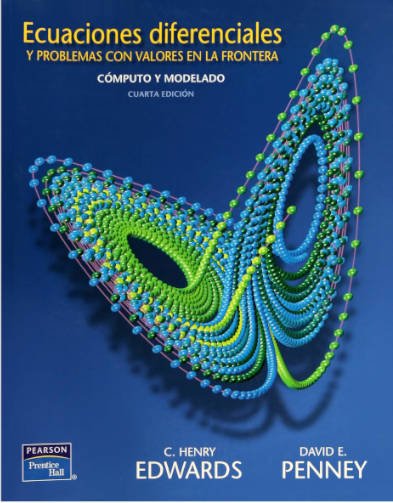
This book on Differential Equations and Boundary Value Problems from our bibliography provides a more accessible treatment of fundamental topics for engineers such as parameter variation, dynamical systems, and linear systems of differential equations.
It includes new computer-generated real graphical applications and interesting modeling projects and software usage, as well as striking a balance between traditional algebraic development and modern geometric and qualitative approaches.
Do you need help with your tasks, assignments, and university work? At University Adviser, you can find the right professor or tutor to help you with your university assignments.